-

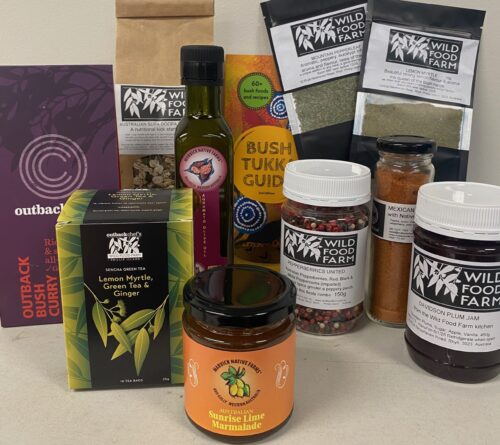
Lemon Myrtle, Green Tea & Ginger – A Bright, Uplifting Australian Brew
Perfect pick-me-up in the morning tea. Great stomach settler after a heavy night.
Refresh your senses with the perfect balance of Australian-grown sencha green tea, zesty lemon myrtle, and warming ginger. This vibrant blend brings together three naturally powerful ingredients to create a tea that’s as delicious as it is nourishing.
We use Australian grown sencha green tea, offering a smooth, clean flavour and a gentle energy boost without the jitters!
Lemon myrtle, one of the most-loved Australian native ingredients, adds a crisp citrus lift while delivering antioxidants and immune-supporting properties. The touch of ginger rounds out the blend with its natural warmth, known to aid digestion and promote circulation.
Our sustainable pyramid-shaped tea bags allow the leaves to unfurl fully, releasing their full aroma and flavour.
These modern tea bags are made from biodegradable, plant-based materials, offering a low environmental footprint without compromising on quality.
They’re a convenient, eco-conscious choice that supports a more sustainable way to enjoy premium tea — no plastic, no waste, just pure flavour.
Perfect for the office, at home, or to keep in your bag for those moments when a friend offers you a less-than-inspiring tea — this blend ensures you always have a healthy, great-tasting option on hand.
Lemon Myrtle, Green Tea & Ginger is more than just a tea — it’s a celebration of Australian-grown goodness, natural wellbeing, and sustainable living, all in one refreshing cup.
-

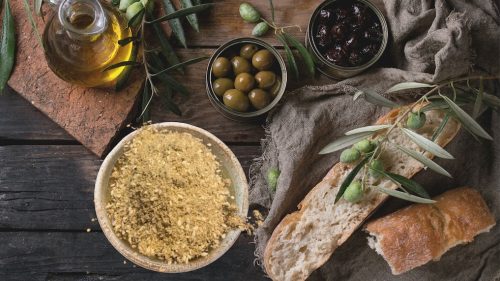
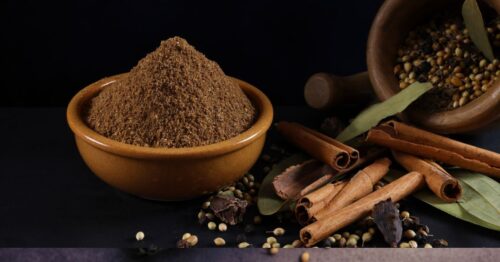
Australian Outback Dukkah is perfect for serving the traditional way: with Australian olive oil and crusty bread.
Why not try some Wild Desert Lime Olive Oil with your dukkah and crusty bread combo?How to present your Outback Dukkah
There's so many ways to enjoy your Outback Dukkah. Perfect on a simple platter with olive oil and crusty bread. If you want to go the extra mile add olives, even a dip, something like hummus goes really well, fetta or a creamy labnah.Enjoy your dukkah
1.Pour some good-quality olive oil into a small dish. 2.Place the dukkah in another small bowl or on a board like in the photo. 3.Tear off a piece of crusty bread (like sourdough or ciabatta). 4.Dip the bread first into the oil, then into the dukkah — it’ll coat beautifully and give a nutty, herby crunch.So many ways to use Outback Dukkah
- Classic dip: with olive oil and crusty bread.
- Coating: for chicken, lamb, or fish before grilling or roasting.
- Topping: sprinkled over hummus, labneh, or roasted vegetables.
- Crunch: added to salads, soups, or avocado toast.
- Breakfast twist: stirred into yogurt or sprinkled over eggs.
- Avocado toast. Great sprinkled over roasted vegetables, eggs
Interesting Facts:
- Every Egyptian family or region has its own version — some sweeter, some spicier.
- It’s considered both a snack and a condiment, bridging the gap between seasoning and food.
- Dukkah has gained global popularity in modern cuisine, especially in Australia and the Middle East, where chefs use it creatively in fusion dishes.
It’s a perfect example of how something simple — nuts, seeds, and spices — can become a deeply flavorful and versatile staple.
Try our Lamb Koftas with some Outback Dukkah
see recipe -
Lemon Myrtle Backhousia citroidora ... the "Queen" of the bushfood industry
This wonderful Australian native herb has been used for food, in cosmetics, insect repellants as bush medicine and much more. Probably the best known bush herb, the leaf has a strong lemon citrus flavour and aroma, great for adding some great flavour to any dish. To learn more about Lemon Myrtle, how to use it, how it grows, is it healthy for you, the history of lemon myrtle. -

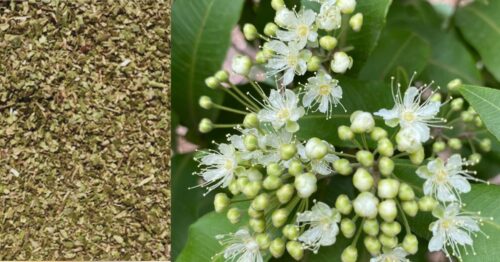
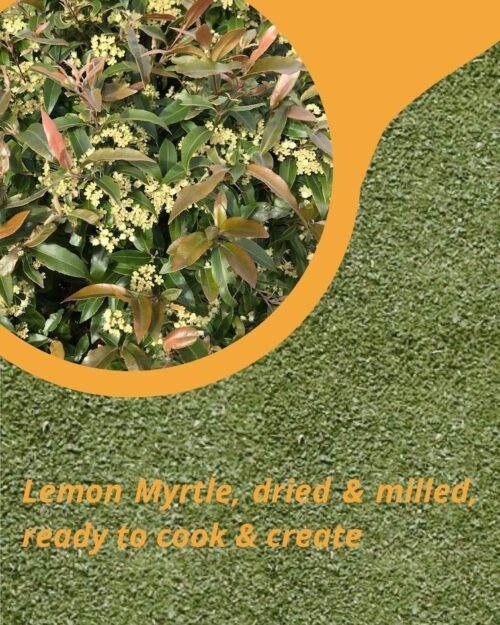
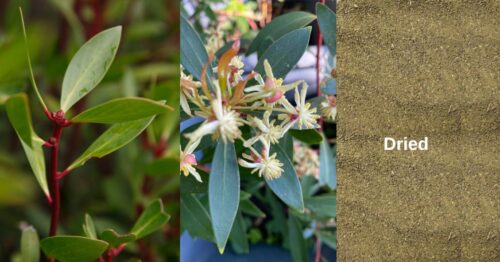
Lemon Myrtle leaves dried & milled
showing are fresh leaves & flowers before the leaves are processed, then they are processed according to customer needs. ie a fine powder or to a tea leaf size. -
Out of stock
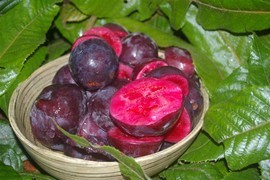
 Davidsonia pruriens Aboriginal name " Ooray" A tart flavoured dark red plum, great for jams and conserves, making sauces to go with beef or kangaroo, a bush fruit known for it's health benefits, much research is currently being done Davidson Plum is a small, narrow, rainforest tree which bears an edible plum with purple-black skin. If you want to give your jams and chutneys a truly gourmet Australian food flavour, these bush fruits are perfect. Great to make jam with and because of it's dark red colouring can be used to colour and flavour sauces, ice-cream an drinks.
 -
Out of stock
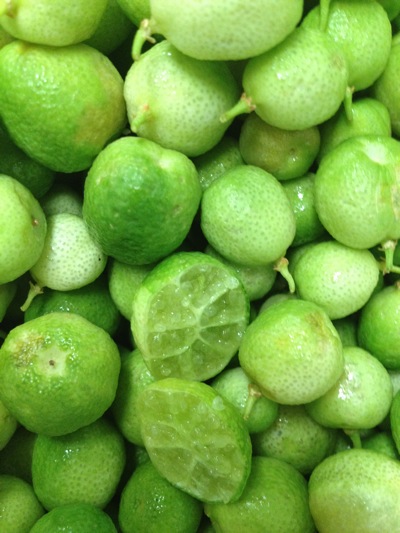
 Desert Limes are a small fruit about the size of a grape with a wonderful "limey" flavour Australian Desert Lime or Wild limes have an intense lime flavour without the tart edge that traditional limes have, I can eat them quiet easily alone. Like all limes they are extremely versatile. There are a number of native limes that have been developed, the Desert Lime being one of them. Wild Limes were used as a food source by Indigenous people, the easy pioneers to Australia harvested them for use in jams and preserves and they are now an extremely popular lime on many restaurant menus.
 -
Out of stock
 Muntries were eaten by Aboriginal people in the south east of South Australia. They would eat them fresh or dry them out to preserve; they could then be ground into a paste, mix with dampers or eat as a leather. They contain up to four times more antioxidants than blueberries and provide natural waxes that are good for skin nourishment.
 -
NATIVE PEPPERLEAF, Tasmannia lanceolata
Soft, peppery, earthy and aromatic
Wild Australian Pepper, both the leaf and berries, come from the alpine areas of Tasmania and North East Victoria. They are from the same bush. The pepperberries are super hot and usually heat or freeze dried.
For the most part native pepper is still wild harvested the bought back to the farm for sorting, cleaning, drying and milling. Whilst it is increasingly grown on private properties it is still harvested on Crown Land, where permits need to be applied for. The leaves of the native pepper plant can be used either fresh or dried. They are often milled to a fine powder and can be directly replace your normal pepper. Use these on a daily basis and you'll learn to love the peppery, slightly eucalypt flavour, uniquely Australian and a touch of the bush! Australian native pepper is packed with anti oxidants and has great stomach settling properties. Read more about the health giving aspects of Australian pepper Many home cooks, chef, food producers and schools are now using native pepper on a daily basis. It is sold both nationally and internationally with the international market growing quickly. -
 Melaleuca alternifolia This plant has everything! Use the aromatic leaves to aid colds, and use the paper bark to wrap and cook your authentic bush tucker meals in. Melaleuca alternifolia is a tall shrub with papery bark and white flowers in spring and summer, it has aromatic foliage where valuable oil is extracted. Tea Tree Oil has great germicidal properties and is used in a range of products, including antiseptics, deodorants, shampoos and soaps. This plant has everything! Use the aromatic leaves to aid colds, and use the paper bark to wrap your authentic bush cuisine. This pack contains 30 viable seeds and propagation notes.
 -

Native or Desert Limes made from native limes grown in West Australia.
Desert Limes are an Australian native fruit that has a soft lime flavour.
The Limes are wild-harvested around the end of the year, according to the season then go straight into the pot to create this sensational marmalade. These bright green baubles have been turned into a marmalade fit for a king or queen -
Bush Tomato or Desert Raisin Relish, perfect relish for your true-blue Aussie Hamburger
This relish made from Australian Bush Tomatoes, Solanum centrale, called Desert Raison's by the early settlers are a low desert shrub.
When the Bush Tomato fruit turns from green to red and drops to the ground it's ready for eating. A popular food source of Australia's indigenous people for generations. This relish is the perfect way to enjoy the unique flavour of the bush tomato. Whilst they are related to tomatoes (Solanum lycopersicum) they could possibly be even a closer relation to the eggplant (S.melongena) which they have many details in common. Bush tomatoes taste like a sun dried tomato with caramel overtones, they can be quite bitter if too large a quantity is used in cooking. Consider them like a spice rather than as a fresh tomato. -
 Portulaca oleracea. This low growing bushfood plant grows in arid and temperate climates and is grown for its spicy leaves and stems. Can be eaten raw in salads or steamed like spinach, a great bushtucker alternative. The seeds can be collected and ground into a paste for cooking. Once established these plants are ver hardy and with small yellow flowers over summer they are a very pretty addition to your bushfood garden. This pack contains approximately 100 seeds and instructions for propagating.